Artificial Intelligence Ethics (AIE)

Google Washington D.C. Headquarters, Julia M. Puaschunder, Evening Adress

Google Headquarter Washington D.C., Julia M. Puaschunder, Evening Address
Inaugural ‘Artificial Intelligence Ethics’ presentation
Google Washington D.C., USA
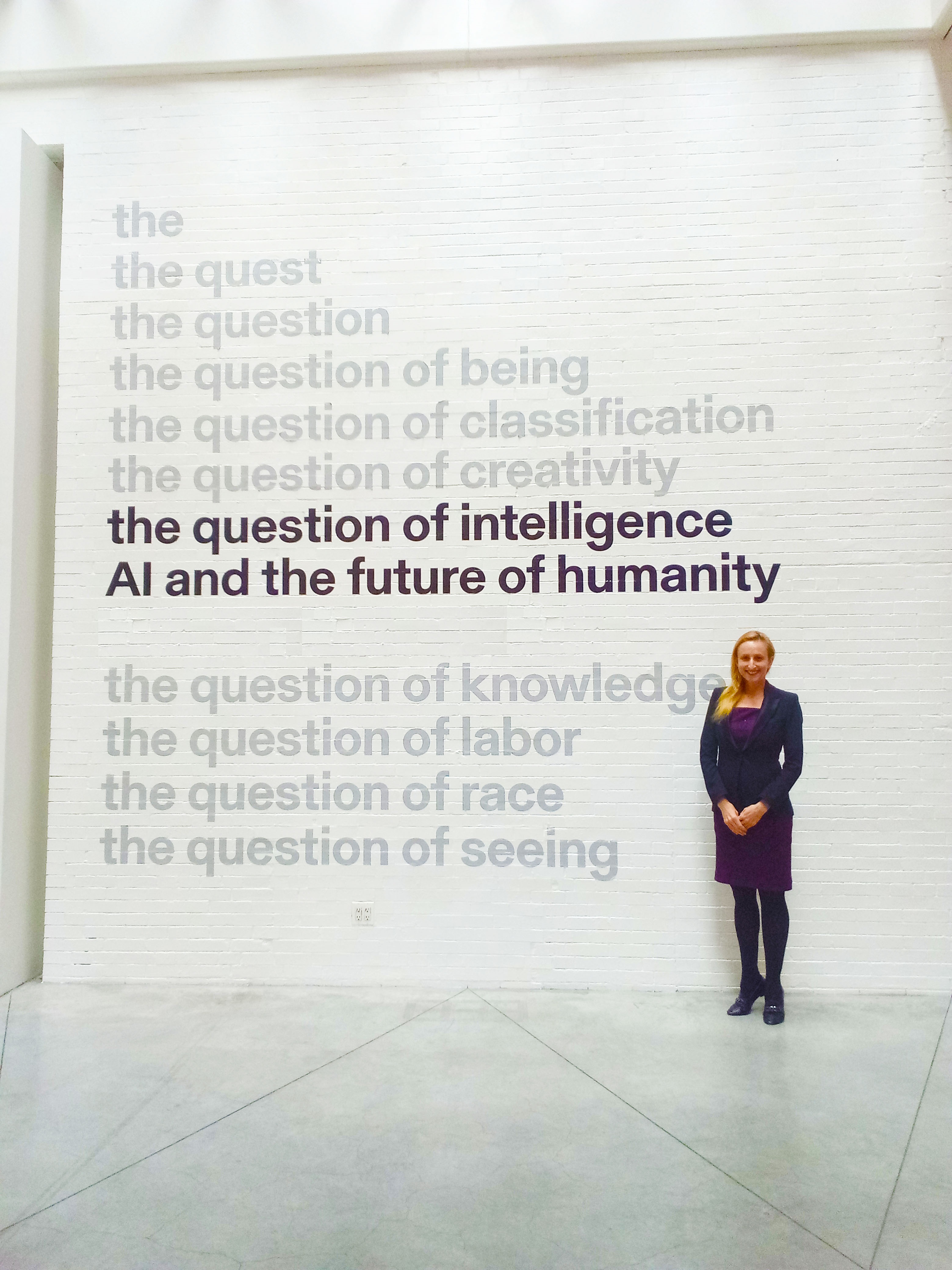
Artificial Intelligence and the future of humanity, Julia M. Puaschunder at The Parsons School of Design of The New School New York New York
Hosted at
The Parsons School of Design at The New School
New York, New York
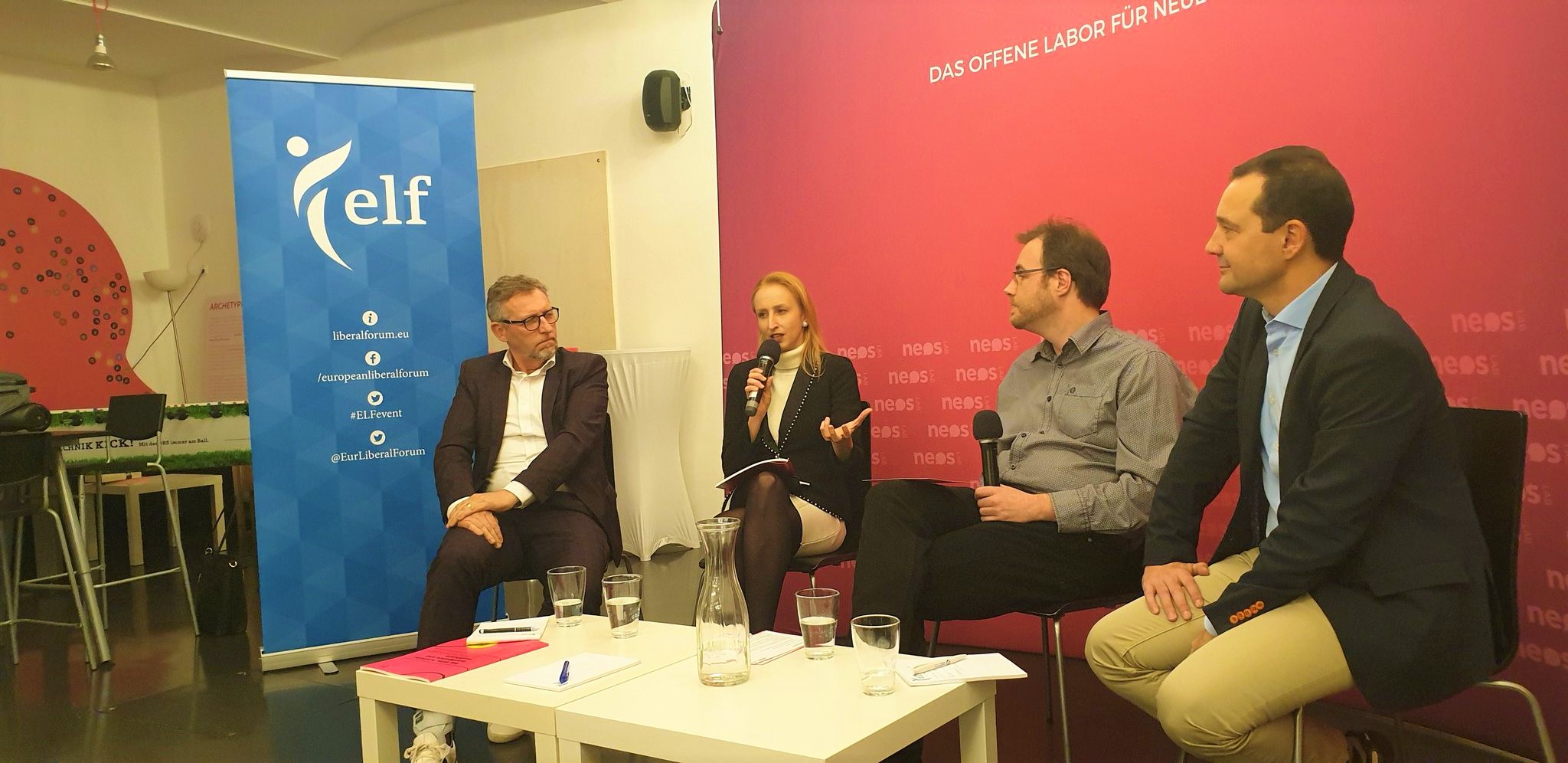
Report to the European Parliament presentation, The European Parliament, European Liberal Forum, NEOS Lab, Vienna, Austria, European Union, Julia M. Puaschunder
Proudly sponsored by the European Parliament
European Liberal Forum

Report to the European Parliament presentation, The European Parliament, European Liberal Forum, NEOS Lab, Vienna, Austria, European Union, Julia M. Puaschunder

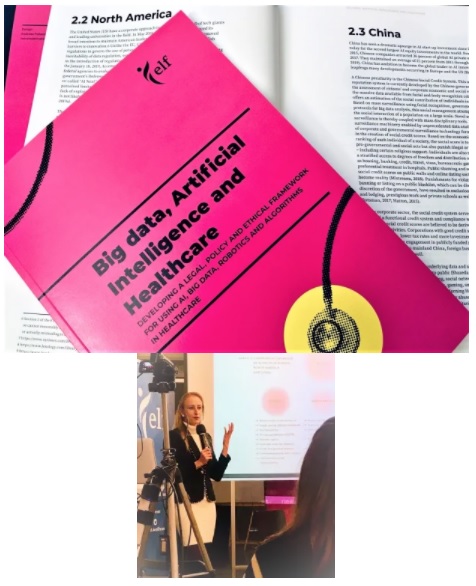
NEOS Lab, Vienna, Austria, EU
Behavioral Economics Artificial Intelligence Online Ethics
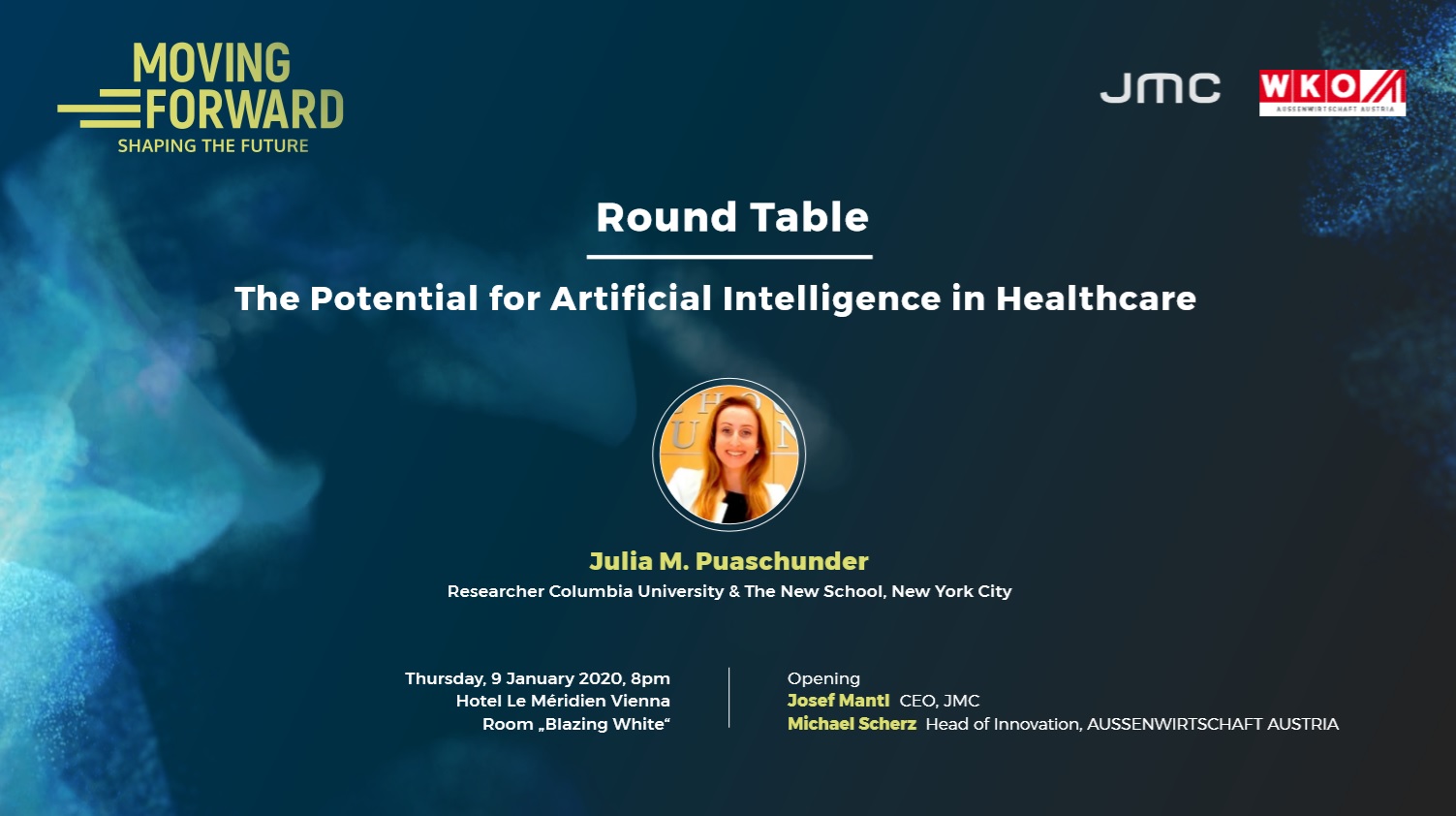
Keynote Roundtable ‘The Potential for Artificial Intelligence in Healthcare’ Julia M. Puaschunder in cooperation with Dr. Josef Mantl, JMC Communications, Vice Mayor of Vienna, Austria, EU, Moving Forward: Shaping the Future Roundtable
Roundtable on
in cooperation with
January 2020
Vienna, Austria, European Union
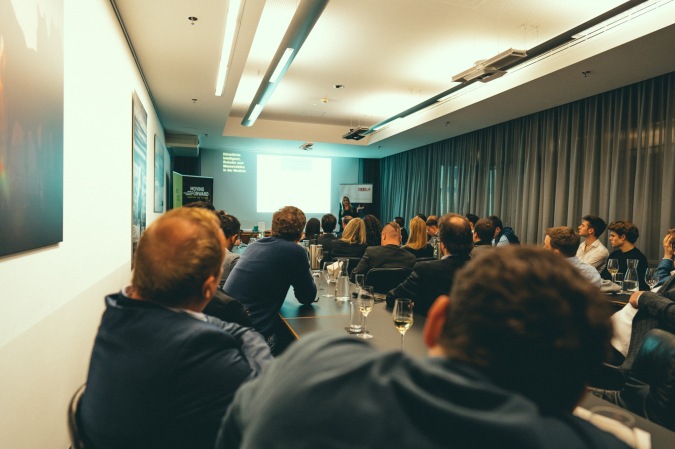
‘The Potential for Artificial Intelligence in Healthcare’ Roundtable for Josef Mantl Communications Moving Forward: Shaping the Future

Keynote Roundtable ‘The Potential for Artificial Intelligence in Healthcare’ Julia M. Puaschunder in cooperation with Dr. Josef Mantl, JMC Communications, Vice Mayor of Vienna, Austria, EU, Moving Forward: Shaping the Future Roundtable

Keynote Roundtable ‘The Potential for Artificial Intelligence in Healthcare’ Julia M. Puaschunder in cooperation with Dr. Josef Mantl, JMC Communications, Vice Mayor of Vienna, Austria, EU, Moving Forward: Shaping the Future Roundtable

Keynote Roundtable ‘The Potential for Artificial Intelligence in Healthcare’ Julia M. Puaschunder in cooperation with Dr. Josef Mantl, JMC Communications, Vice Mayor of Vienna, Austria, EU, Moving Forward: Shaping the Future Roundtable

Keynote Roundtable ‘The Potential for Artificial Intelligence in Healthcare’ Julia M. Puaschunder in cooperation with Dr. Josef Mantl, JMC Communications, Vice Mayor of Vienna, Austria, EU, Moving Forward: Shaping the Future Roundtable

Keynote Roundtable ‘The Potential for Artificial Intelligence in Healthcare’ Julia M. Puaschunder in cooperation with Dr. Josef Mantl, JMC Communications, Vice Mayor of Vienna, Austria, EU, Moving Forward: Shaping the Future Roundtable
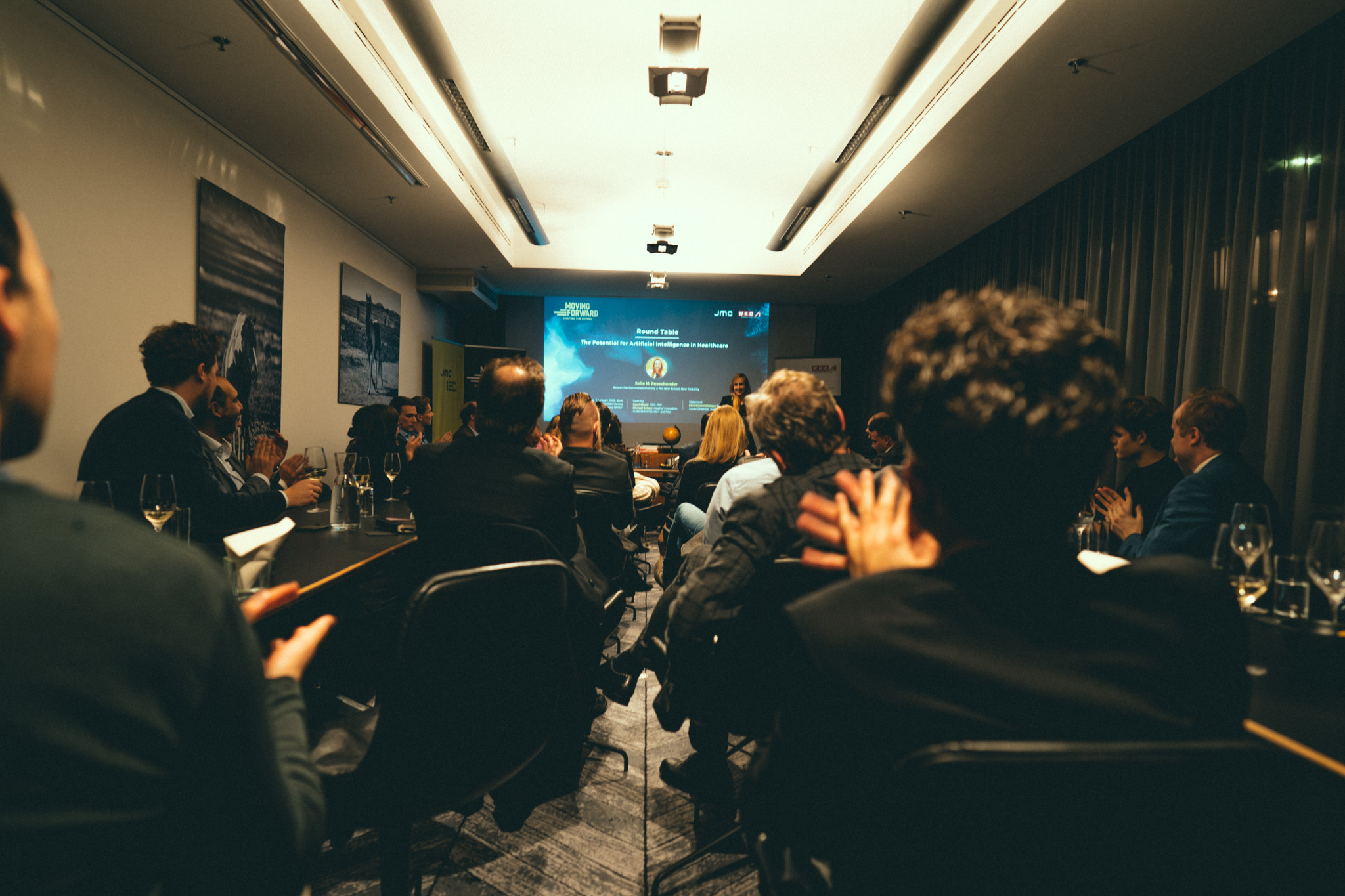
Keynote Roundtable ‘The Potential for Artificial Intelligence in Healthcare’ Julia M. Puaschunder in cooperation with Dr. Josef Mantl, JMC Communications, Vice Mayor of Vienna, Austria, EU, Moving Forward: Shaping the Future Roundtable
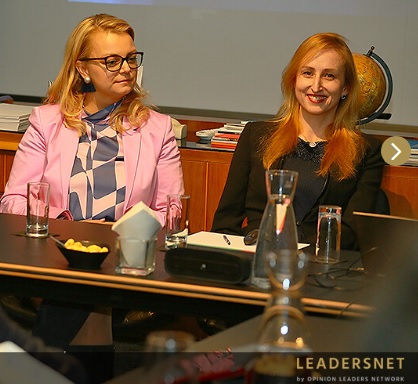
Keynote Roundtable ‘The Potential for Artificial Intelligence in Healthcare’ Julia M. Puaschunder in cooperation with Dr. Josef Mantl, JMC Communications, Vice Mayor of Vienna, Austria, EU, Moving Forward: Shaping the Future Roundtable

TUthe TOP Vienna University of Technology, Panel presentation, Digi-Disruption & New Age Renaissance, Professor DDr. Martin Gelter, Dr. Paul Schmelzing, Chair Professor Dr. Alexander Stremitzer, Julia M. Puaschunder
The project studies Artificial Intelligence (AI) in our contemporary society. What is the impact of AI, robotics, big data, online social media and searchplaces entering our workforce and our daily lives on the global economy and human society?
With 24/7 working robots that can live eternally entering our workforce without having feelings, ethical questions arise whether robots, algorithms and AI should be granted citizenship and legally be considered as quasi-human beings — a technocratic and legal trend that has already started.
The descriptive and empirical research targets at aiding a successful introduction of AI into the workforce and society but also asks critical questions in unraveling the ethical boundaries of our future artificial world.
How to balance robots living forever in light of overpopulation and finite resources? How do we switch quasi-human intelligence off when misbehaving or if AI life has become a burden that cannot be borne by society?
In light of robots already having gained citizenship and being attributed as quasi-human legally, should AI and robots be granted full citizen rights – such as voting rights? Should we reap the economic benefits of AI and have a democracy with a diversified populace including robots? If so, should robotics be designed to resemble human beings (e.g., with emotions and fallibilities) or do we want to strive for creating completely rational AI? Would feelingless AI be vulnerable or will the computational power and energetic capacities of robots outperform humankind?
Given the humane fallibility and biases, would a rational AI agent make better democratic choices? Should AI therefore be used for governance as for being insusceptible to bribery and fraud, or does the installment of algorithms in leadership positions imbue dangers to humankind?
How should we organize the human-led evolution of AI production and the blend of human-AI enhanced workforce? And what is it that makes human humane in the artificial age?
The project investigates the economic, legal and societal impact of AI from an ethical perspective. The current legal status of robots being referred to as quasi-human is discussed and this diversified society’s implications for the general populace and democracy.
Humanness is highlighted as key to future success in the age of AI and automated control. The research draws from behavioral human decision making insights and evolutionary economics in order to outline what makes human humane and how human decision making is unique to set us apart from AI. AI is argued to bevalue humanness and improve the value of human-imbued unique features.
The findings hold novel insights on future success factors for human resource management but also invaluable contributions for the successful introduction of AI and digital humanities in modern democracies and societies.

Acropolis, Athens, EU, Julia M. Puaschunder, visiting researcher
Athens, Greece, EU

Palace of Justice, Austrian Supreme Court, Julia M. Puaschunder
Palace of Justice, Vienna, Austria, EU
Contact: Julia M. Puaschunder
Julia.Puaschunder@newschool.edu
Julia.Puaschunder@columbia.edu

Washington D.C., Julia M. Puaschunder, Newseum, News Museum on the Mall
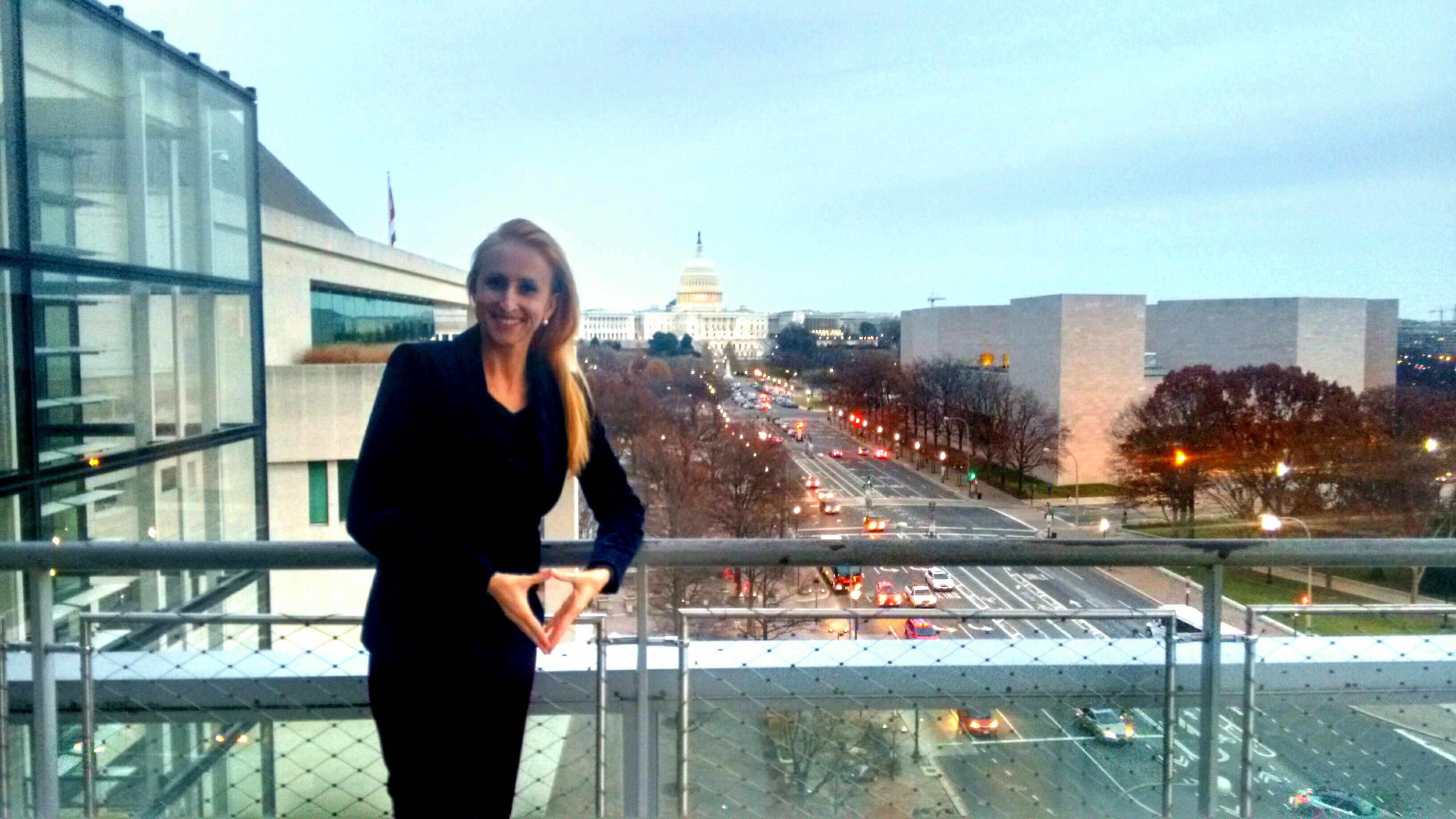
Washington D.C. Mall, Julia M. Puaschunder, Capitol
Roll-out of project
Washington D.C.
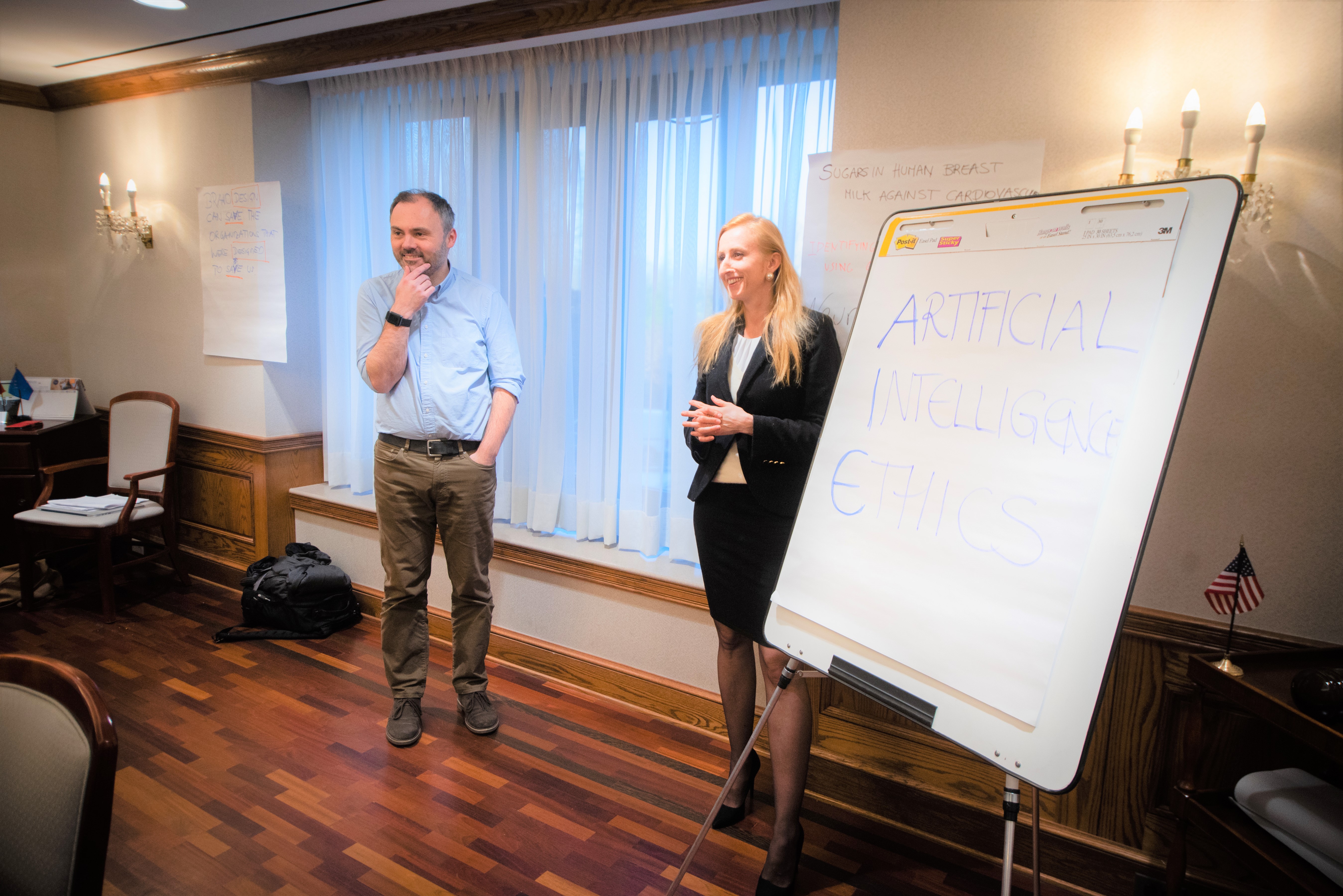
Embassy of Austria in Washington, D.C. and Consular Section, Julia M. Puaschunder, Lightening Talk
Presentation at Austrian Embassy in the United States, Washington D.C., December 2018

United States Bureau of Labor Statistics, Washington D.C., Julia M. Puaschunder, Conference Address
Conference presentation at Erdman Center of Princeton University
Princeton, New Jersey, USA

Princeton University, Julia M. Puaschunder, Scholar in the Interuniversity Consortium of New York
Collaboration with Princeton University

Julia M. Puaschunder at Princeton University
Princeton, New Jersey, USA

‘Effective Altruism Global 2017’
Palace of Fine Arts, Innovation Hangar
San Francisco, California, USA
Financial and in-kind support of the Association for the Eugene Lang Liberal Arts College of The New School, European Parliament Research Division, Fritz Thyssen Foundation, Georgia State University, Huebner Foundation for Insurance Education, Janeway Center Fellowship, Monmouth University, Prize Fellowship of the Inter-University Consortium of New York, Routledge, The New School for Social Research New York (Dean’s List, Fee Board Scholarship, President’s Scholarship, The Parsons School of Design, The School for Public Engagement & Public Affairs), University of Vienna, and Vernon Art and Science is gratefully acknowledged.

Princeton University, Julia M. Puaschunder, Scholar in the Interuniversity Consortium of New York
Coverage:
Media: Puaschunder, J.M. (2021). Panel ‘No time to think of what you don’t have: Digitalisation & AI in Europe,’ European Liberal Forum in cooperation with NEOS Lab, Billrothhaus, Vienna, Austria, European Union, November 16, 2021.
Podcast:
2019: Artificial Intelligence Ethics

Artificial Intelligence Ethics in Law, Democracy and Free Markets, Podcast, Julia M. Puaschunder, 2nd edition forthcoming
Upcoming: Artificial Intelligence Ethics Podcast second edition featuring Guest speakers on Artificial Intelligence Ethics in Medicine on behalf of the European Society of Medicine
Output:
Publications:
Books
Work-in-progress
Puaschunder, J.M. (under review). Human Rights Online.
Puaschunder, J.M. (under review). Digital inequality. Oxford University Press.
Puaschunder, J.M. (under review). Artificial Intelligence Ethics. Routledge.
Puaschunder, J.M. (forthcoming). Nudgitize yourself! Behavioral Economics for Everyone. Kindle Direct Publishing.
Published books
Articles
Work-in-progress
Puaschunder, J.M. & Schwarz, G. (under review). The future is now: How joint decision-making curbs hyperbolic discounting but blurs social responsibility in the intergenerational equity public policy domain.
Puaschunder, J.M. (under review). The future of medicine: Artificial Intelligence, algorithms, big data and robotics in healthcare.
Beerbaum, D., Ikäheimo, S. & Puaschunder, J.M. (forthcoming). A behavioral approach to voluntary change and innovation in external financial reporting: A case study of the restructuring of the Annual Report on Form 20-F and the Financial Report.
Puaschunder, J.M. (forthcoming). The future of resilient finance: The relation of cryptocurrencies and sustainability ethics. In W. Leal, Climate Change Policies: Science and Technology in Support of Policy-Making in Climate Change Mitigation and Adaptation, Springer Nature.
Published articles
Beerbaum, D., Piechocki, M. & Puaschunder, J.M. (2019). Measuring accounting reporting complexity with customized extensions XBRL: A behavioral economics approach. Journal of Applied Research in the Digital Economy, 1, 2-38.
Beerbaum, D., Piechocki, M. & Puaschunder, J.M. (2019). Accounting reporting complexity measured behaviorally. Internal Auditing & Risk Management, 4, 56, 35-47.
Puaschunder, J.M. (2019). Artificial Intelligence in the healthcare sector. Scientia moralitas: International Journal of Multidisciplinary Research, 4, 2, 1-14.
Puaschunder, J.M. (2019). Organizational Artificial Intelligence behavior. Journal of Applied Research in the Digital Economy, 2, 1, 1-14.
Puaschunder, J.M. (2019). Artificial Diplomacy: A guide for public officials to conduct Artificial Intelligence, Journal of Applied Research in the Digital Economy, 1, 39-54, translated by Run Wang into Chinese.
Puaschunder, J.M. (2019). Big data ethics. Journal of Applied Research in the Digital Economy, 1, 55-75.
Puaschunder, J.M. (2017). Nudging in the digital big data era. European Journal of Economics, Law and Politics, 4, 4, 18-23.
Puaschunder, J.M. (2017). The nudging divide in the digital big data era. International Journal of Research in Business, Economics and Management, 1, 3, 49-53. Coverage: The Living Library
Chapters
Proceedings
Work-in-progress
Puaschunder, J.M. (forthcoming). Prospect theory incentives in ‘pay for sustainability’ remuneration schemes. Proceedings of the Scientia Moralitas conference. February 19, 2023.
Published proceedings
Puaschunder, J.M. (2018). Artificial Intelligence Evolution: On the virtue of killing in the artificial age. Artificial Intelligence applications and innovations. Proceedings of the 15th International Conference on Artificial Intelligence Applications and Innovations and 20th International Conference on Engineering Applications of Neural Networks at Crete, Greece, European Union, May 24-26.
Blogs
Puaschunder, J.M. (2019). Big Data, algorithms and health data. Vienna, Austria: The New Austria and Liberal Forum Lab Blog.
Consultancy reports
Reports on behalf of the European Parliament European Liberal Forum in cooperation with The New Austria and Liberal Forum:
A Behavioral Economics Approach to Digitalisation. The Living Library, GovLab at the New York University Tandon School of Engineering, New York, New York, USA

Legal situation of Artificial Intelligence in Healthcare, Julia M. Puaschunder, Rechtliche Fragen beim Einsatz von künstlicher Intelligenz in der Medizin
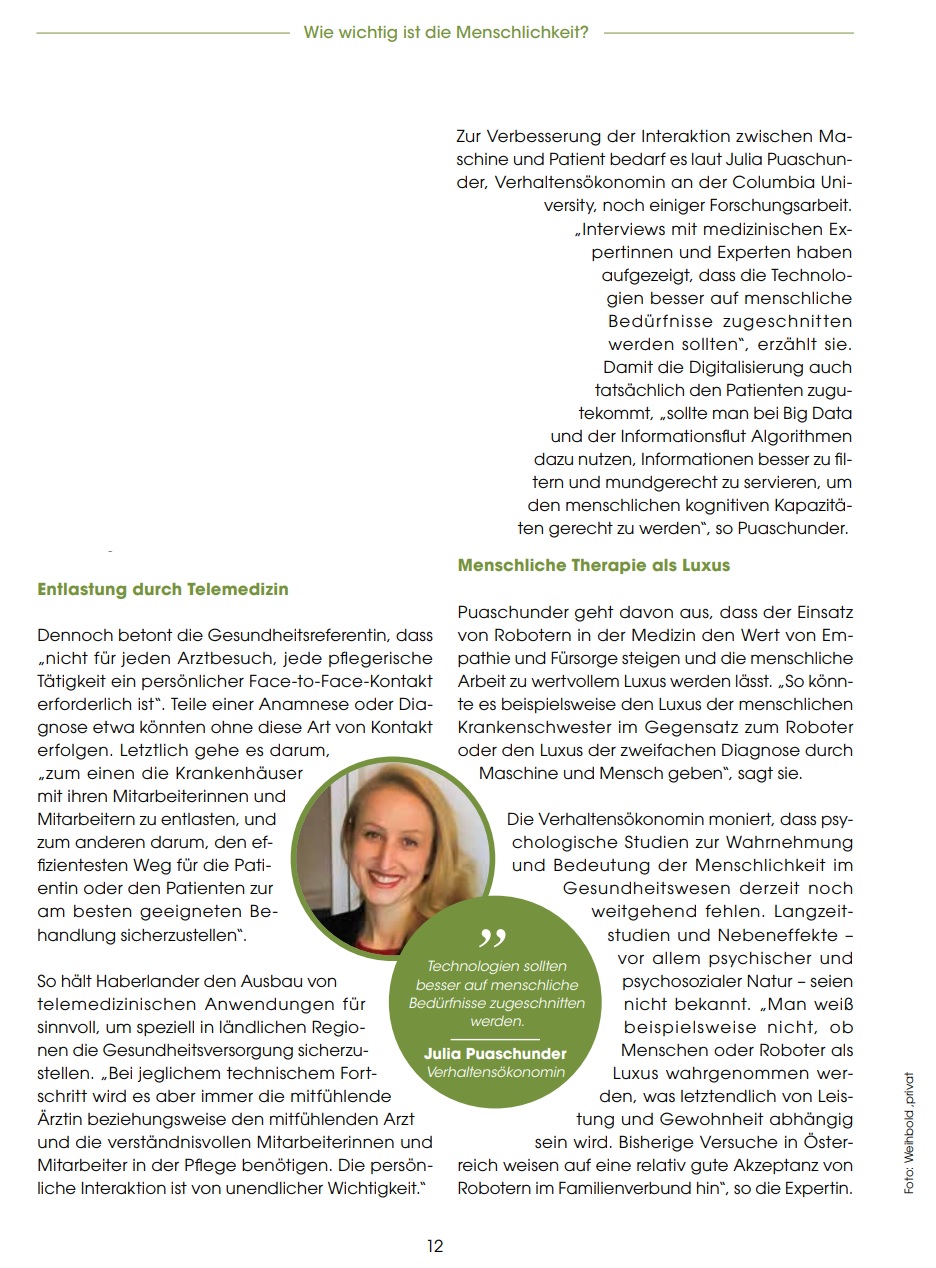
Legal situation of Artificial Intelligence in Healthcare, Julia M. Puaschunder, Rechtliche Fragen beim Einsatz von künstlicher Intelligenz in der Medizin